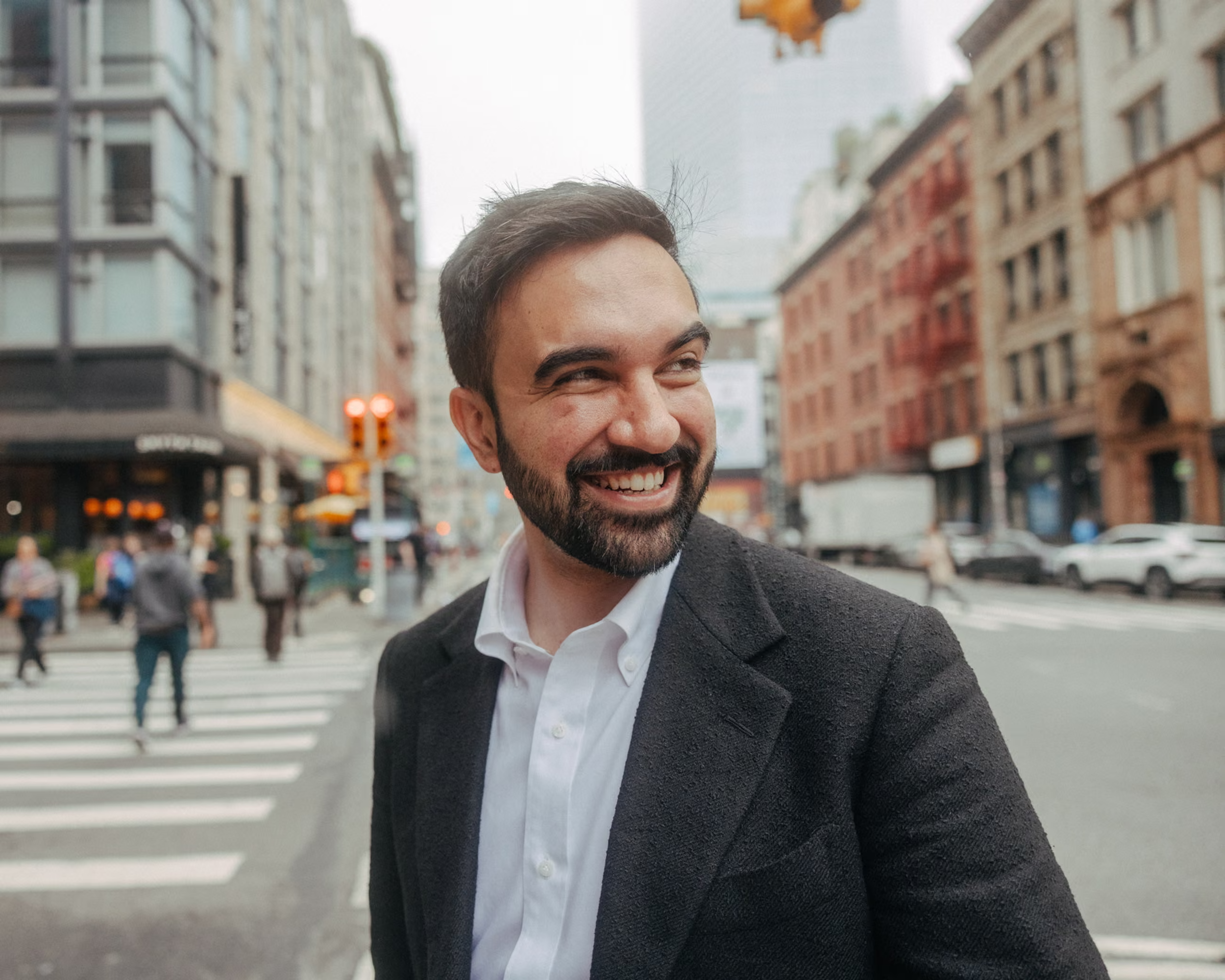
On November 4, 2025, New York City voters made history. Zohran Mamdani — a 33-year-old state assemblyman from Astoria, Queens — defeated former Governor Andrew Cuomo in a stunning landslide to become the city’s next mayor. The victory marks one of the most significant political upsets in modern New York history, signaling a generational and ideological shift toward bold, progressive leadership in America’s largest city.
Mamdani, the son of Ugandan-Indian immigrants, has long been a champion for working-class New Yorkers. First elected to the State Assembly in 2020, he built his political identity around fighting for tenants, transit riders, and immigrants. His ascent from local activist to mayor-elect represents a resounding endorsement of a politics grounded in community organizing and moral conviction — a sharp break from the transactional, donor-driven machine politics that have dominated City Hall for decades.
A Movement, Not Just a Campaign
From the start, Mamdani’s campaign defied convention. Refusing corporate money, he relied on a vast network of volunteers, tenant organizers, and local activists who knocked on doors, organized rallies, and built one of the most energized movements New York has seen in decades. His platform — centering housing justice, climate action, and economic equity — resonated with a city grappling with soaring rents, record homelessness, and growing despair about affordability.
Mamdani called for an ambitious expansion of social housing, universal rent stabilization, and the creation of a city-owned public power utility to replace Con Edison. His campaign slogan, “A City for the Many,” became a rallying cry for young voters and working-class communities who felt left behind by years of corporate-driven urban policy.
His opponent, Andrew Cuomo, sought to stage a political comeback three years after his resignation from the governorship. Backed by powerful unions, real estate donors, and party elites, Cuomo ran on promises of “steady leadership” and “competence.” But for many voters, his campaign felt like a relic of another era — a reminder of the backroom deals and establishment politics they wanted to move past.
A Generational Rebellion
Mamdani’s rise is emblematic of a larger generational rebellion within New York politics. He represents a cohort of young, diverse, and unapologetically left-wing leaders — alongside figures like Alexandria Ocasio-Cortez, Jabari Brisport, and Tiffany Cabán — who have transformed the city’s political landscape from the ground up.
This movement is driven by a simple but powerful idea: that democracy should serve ordinary people, not the wealthy few. In neighborhood after neighborhood, Mamdani’s campaign found traction among tenants facing eviction, students burdened by debt, and gig workers fighting for fair pay. His rallies felt more like community gatherings than traditional political events — filled with chants, music, and stories from New Yorkers who saw themselves in his campaign.
A New Era for New York
Mamdani’s victory is being felt far beyond the five boroughs. Political observers across the country have compared his win to other breakthrough progressive moments — from Harold Washington’s 1983 mayoral victory in Chicago to Bernie Sanders’ early successes in Vermont. In a city long considered the heart of corporate capitalism, voters have now elected a democratic socialist who openly challenges real estate developers, Wall Street interests, and police unions.
Nationally, Mamdani’s triumph may serve as a blueprint for a new generation of left-wing candidates who seek to merge moral clarity with grassroots power. It’s a signal that progressive politics — once dismissed as fringe — can win major cities and shape the national conversation on housing, labor, and climate.
What Comes Next
The challenges awaiting Mamdani at City Hall are immense. New York faces a housing crisis of historic proportions, worsening climate threats, and a fragile budget stretched thin by inequality. His first year in office will test whether a progressive mayor can deliver transformative policy within a system built to resist it.
Yet Mamdani has made clear that his administration will govern the same way it campaigned: from the bottom up. He has promised to bring community organizers, tenant leaders, and working-class New Yorkers into decision-making roles, pledging to make City Hall “a people’s institution, not a corporate one.”
A City Awakened
Zohran Mamdani’s victory is more than a political milestone — it’s a cultural shift. It reflects a city reclaiming its voice after years of cynicism, where ordinary people demanded more than managerial competence and incremental change. His win shows that New York is ready for a mayor who sees politics not as a career, but as a collective act of care.
As fireworks lit up the Queens skyline on election night, Mamdani addressed a jubilant crowd of supporters: “This victory belongs to every tenant fighting eviction, every worker demanding dignity, and every New Yorker who refuses to give up on this city. Tonight, we showed that power doesn’t just come from City Hall — it comes from the people.”
The city that never sleeps has awakened to a new kind of politics — one rooted in community, justice, and hope.
